


It's 3 AM, the baby is hungry, and you need a warm bottle—fast. While the microwave seems like the quickest fix, it’s a shortcut to avoid for very good reasons. Microwaves create dangerous "hot spots" that can burn a baby's mouth and degrade the essential nutrients in breast milk and formula.
Fortunately, the safest methods are also the simplest, often requiring little more than a bowl and warm water. Knowing these easy alternatives gives you the confidence to prepare a safe, comfortable feeding for your baby every time, whether you’re at home or on the go.
Why Microwaves Are a Major "No" for Baby Bottles
When your baby is crying, the speed of a microwave can feel like a lifesaver, but for your baby’s safety, it should always be skipped. Microwaves heat liquids incredibly unevenly, creating invisible hot spots. These super-heated pockets of milk or formula can easily and severely burn your baby’s sensitive mouth and throat, even after shaking the bottle.
Beyond the burn risk, the intense heat can also damage the milk itself. This process, known as nutrient degradation, destroys essential vitamins and proteins. For breast milk, this is especially critical, as its unique antibodies are quickly broken down by high heat. Furthermore, heating bottles in the microwave can cause some plastics to release harmful chemicals.
In short, the two main reasons pediatricians say to avoid the microwave are:
- Dangerous Hot Spots: Creates pockets of scalding liquid that can burn your baby.
- Nutrient Loss: The intense heat destroys vital components in breast milk and formula.
The Gold Standard: The Warm Water Bath
This simple method requires no special gadgets and is considered the gold standard because it’s gentle, effective, and works every time. While an electric bottle warmer offers convenience, a bowl of warm water provides the same safe, consistent result without taking up counter space.
Follow this four-step process:
- Fill a bowl or mug with warm water from the tap. The key is warm, not hot. The water should feel pleasantly warm to your touch, like a comfortable bath. Never use boiling water, as it can damage the milk's nutrients and the bottle itself.
- Place the sealed bottle into the bowl. Ensure the water level stays below the bottle’s collar or nipple ring.
- Let the bottle sit for a few minutes. A bottle from the fridge may take up to five minutes, while a room-temperature one may only need two.
- Gently swirl the bottle every minute or so. This helps the milk warm evenly, preventing any cooler pockets.
This gentle heating process preserves all important nutrients and completely avoids the risk of dangerous hot spots.
How to Perform the Perfect Temperature Check
Before giving the bottle to your baby, this non-negotiable safety check takes just a moment. After gently swirling the bottle, unscrew the top and let a few drops fall onto the inside of your wrist. This is the most reliable way to test the temperature before a feeding.
The skin on your inner wrist is thin and sensitive, much like the inside of your baby’s mouth. Your hands are far less reliable because they're desensitized to subtle temperature changes. Your wrist acts as a perfect built-in thermometer, giving you an accurate preview of what your baby will feel.
You’re aiming for lukewarm. The drops should feel neutral—neither hot nor cold. If you can barely feel a temperature difference, you’ve nailed it. This simple pass/fail test gives you complete peace of mind with any warming method.
The "In a Hurry" Method: Using a Running Faucet
When your baby is demanding a bottle now, your kitchen faucet can be an effective tool. This method is all about speed, getting a bottle from cold to lukewarm in a minute or two.
Hold the sealed bottle at an angle under a steady stream of warm—not hot—tap water. The most important step is to continuously rotate the bottle, like you’re turning corn on the cob. This constant motion helps the milk warm evenly and avoids hot spots. After a minute or two, perform the wrist test.
While this is one of the fastest manual methods, its clear downside is that it uses a significant amount of water. Because of this, most parents reserve the faucet technique for moments when they're truly in a pinch.
Convenience vs. Cost: Is a Bottle Warmer Worth It?
If the juggling act of warming water feels like one chore too many, an electric bottle warmer might be the solution. These countertop gadgets are designed to heat a bottle to the perfect temperature with push-button simplicity, offering a "set it and forget it" approach.
The core promise of a bottle warmer is consistency. Most models use a gentle water bath or steam to bring the milk up to temperature evenly, eliminating the risk of hot spots. But does this convenience outweigh the simplicity of a free water bath?
A comparison of a bottle warmer versus a bowl of hot water comes down to a few key differences:
| Factor | Water Bath Method | Electric Bottle Warmer | | :--- | :--- | :--- | | Cost | Free (uses a bowl you own) | An added expense ($25-$80+) | | Consistency | Relies on your judgment | Automatic and precise | | Speed | 2-5 minutes, requires attention | 2-5 minutes, typically hands-free | | Portability | Easy; any bowl will do | Standard models need an outlet |
Ultimately, the decision is personal. A warmer trades money and counter space for convenience. If you value automation and want to take one variable out of your feeding routine, it can be a worthwhile investment.
Your On-the-Go Warming Guide: 3 Hacks for Travel
Feeding your baby away from home doesn't have to be a scramble. One of the best travel bottle warming hacks requires just a little planning: the insulated thermos. Before you head out, fill a quality thermos with hot (not boiling) water. When it’s time for a feeding, you have a ready-made portable water bath—pour the water into the bottle’s cap or a mug and place the bottle inside for a few minutes.
If you're caught without a thermos, don’t panic. Most cafes and restaurants are happy to help. Simply ask, “Could I please have a small cup of hot water to warm my baby’s bottle?” This simple request turns any coffee shop into a temporary warming station.
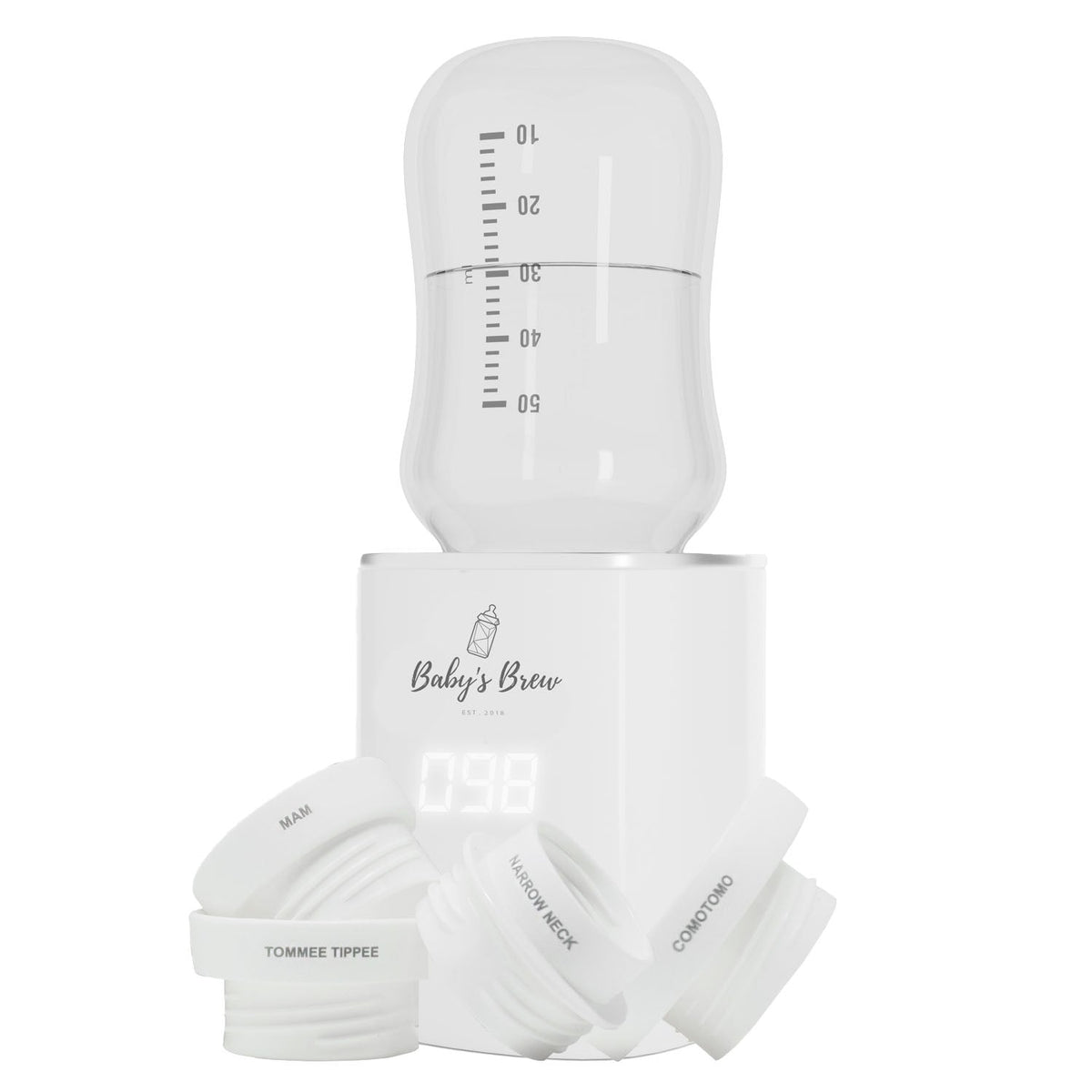
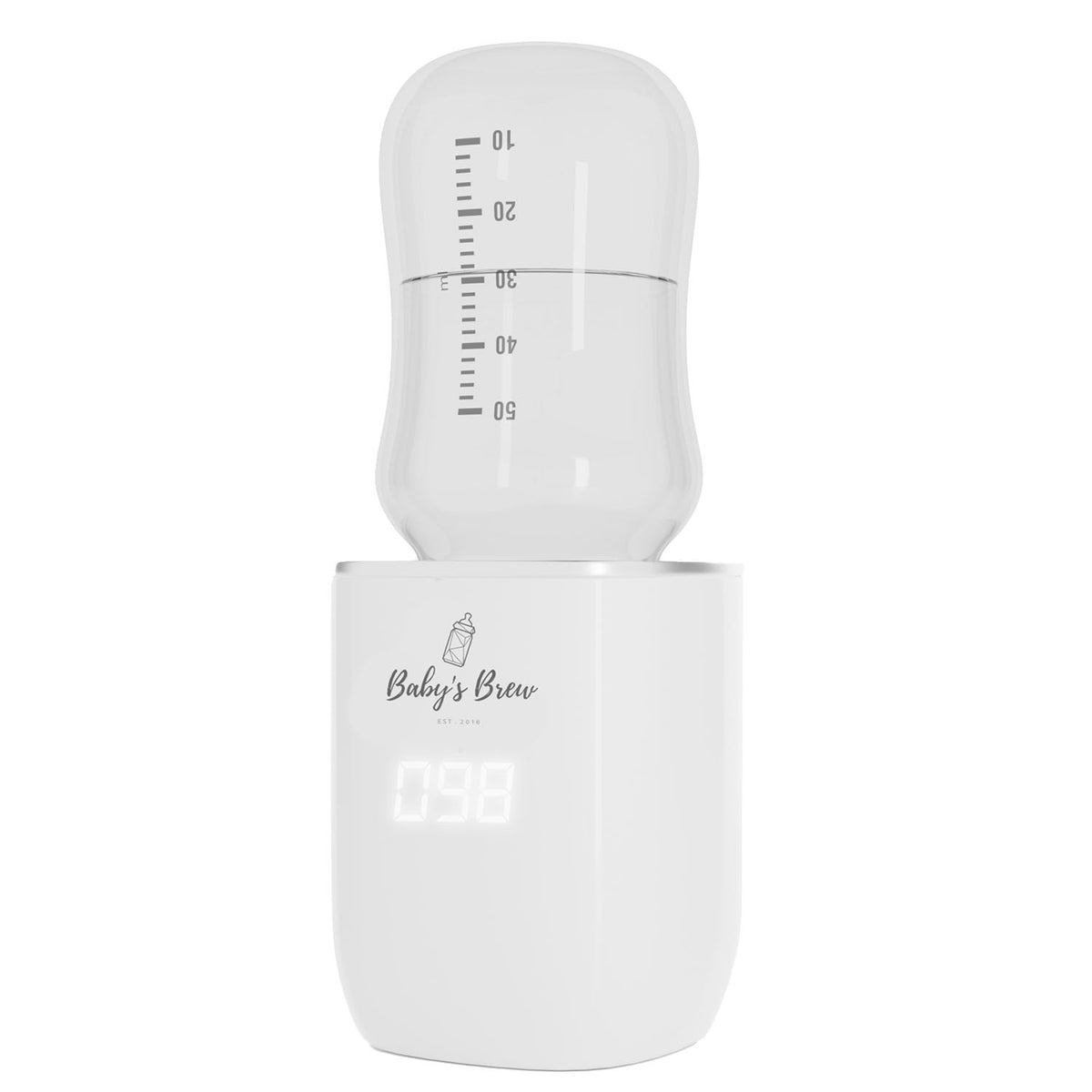
For a more streamlined option, a battery-powered travel warmer might be a perfect fit. The best portable bottle warmers for travel are compact, hold a charge for several feedings, and eliminate the need for external water. While it's an extra gadget to buy and pack, the push-button convenience is a game-changer for frequent travelers.
From Freezer to Bottle: How to Safely Thaw and Warm Frozen Milk
Planning is especially important when dealing with frozen milk. The best method for thawing frozen breast milk safely is to place it in the refrigerator overnight. This slow, gentle thaw preserves nutrients and takes about 12 hours, so try to move a bag from the freezer to the fridge before you go to bed.
For a faster thaw, place the frozen bag or bottle in a bowl of cool or lukewarm water, or hold it under a cool running tap. Never use hot water or a microwave to thaw frozen milk; the extreme temperature difference can destroy proteins and create dangerous hot spots. Once the milk is liquid, warm it using one of the methods covered earlier.
Once milk is thawed, keep these safety rules in mind:
- Use Within 24 Hours: Thawed breast milk should be used within 24 hours of becoming fully liquid.
- Never Refreeze: Once thawed, milk cannot be put back in the freezer.
- Swirl, Don’t Shake: Gently swirl the bottle to mix the fat back in. Shaking can damage some of the milk’s valuable components.
The Surprising Truth: Does a Baby Bottle Even Need to Be Warmed?
After all the focus on getting the temperature just right, here’s a surprising truth: you might not have to warm the bottle at all.
The tradition of warming milk comes from mimicking the body-temperature warmth of breastfeeding, which can be comforting. Nutritionally, however, there is no advantage. It is perfectly safe for most healthy babies to drink formula or breast milk at room temperature or even cool from the refrigerator. The warming step is purely for preference, not safety or health.
Ultimately, the correct temperature for baby milk comes down to your little one. Some babies are particular and will refuse a chilly bottle, while others couldn't care less. Offer a room-temperature bottle to see how they react. If your baby happily accepts it, you’ve just unlocked a major time-saver.
Safe Bottle Warming Made Simple
With these simple and reliable techniques, you can confidently prepare a perfect bottle for your little one, whether you're at home or on the move. Your go-to methods are straightforward:
- The Go-To: Use a warm water bath for gentle, even heating.
- The Quick Fix: Use a running faucet when you're in a hurry.
- On the Road: Pack a thermos of hot water for a portable solution.
The golden rule is simple: no matter how you warm it, always test a few drops on your wrist first. It should feel neutral, not hot. Mastering this small step ensures every feeding is safe and comfortable. You've got this.
Frequently Asked Questions
1. Is it ever safe to microwave a baby bottle?
No. Microwaving heats unevenly and creates hidden hot spots that can burn your baby’s mouth and throat. It can also break down important nutrients in breast milk and formula. Even if the bottle feels warm on the outside, the milk inside can be dangerously hot.
2. What temperature should a baby bottle be?
Milk should feel lukewarm—close to body temperature. It should feel neutral on the inside of your wrist, not hot and not cold. If you can barely detect warmth, it’s just right.
3. How long does it take to warm a bottle using a water bath?
Most bottles warm in 2–5 minutes depending on starting temperature. Room-temperature milk warms faster, while refrigerated milk may take closer to five minutes.
4. Can babies drink cold milk from the fridge?
Yes. For healthy full-term babies, it’s safe to drink breast milk or formula cold or at room temperature. Warming is typically about comfort, not nutrition.
5. How do I warm a bottle while traveling?
Bring an insulated thermos filled with hot (not boiling) water and create a portable water bath when needed. You can also ask a café for a cup of hot water. Battery-powered travel warmers are another convenient option.
6. What is the safest way to thaw frozen breast milk?
The safest method is thawing in the refrigerator overnight. For faster thawing, place the sealed milk bag in cool or lukewarm water. Never thaw frozen milk in a microwave or boiling water.
7. How long is thawed breast milk good for?
Once fully thawed in the refrigerator, breast milk should be used within 24 hours. It should never be refrozen.
8. Should I shake or swirl a warmed bottle?
Always gently swirl. Shaking can break down some of breast milk’s beneficial components and introduces excess air bubbles.
0 comments